S corp filingA file with one proof.
This file is made up. It shows how the count stays at one when two papers never appear.
See the blank.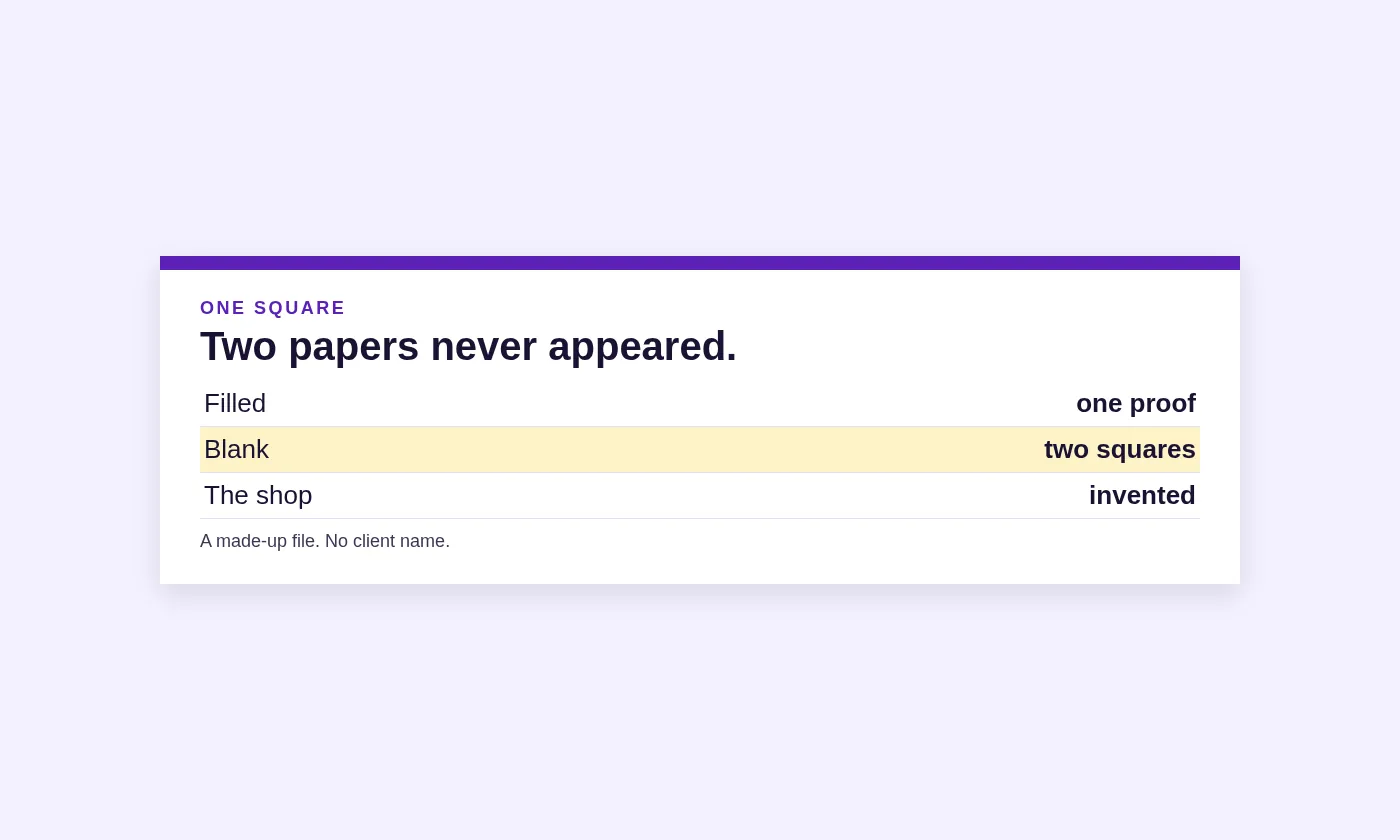
This file is made up. It shows how the count stays at one when two papers never appear.
See the blank.Picture a company with two owners. No city is attached to it. No dollar figure is attached to it. The company in this story was invented for the example.
The acknowledgment exists. It names a day, and that day is enough to fill the first proof. The return was received. That is all the paper says.
Both K-1s are still inside a portal. Neither owner has the page. The send count is zero against an owner count of two. The second proof is empty.
The wage forms are missing. The payroll register may exist in the software, and a draw may have been labeled as pay. None of that fills the third proof. Health coverage, if the company paid it for an owner who holds more than two percent, is not on a wage statement in this story because the wage statement is not in the file.
The count is one. We do not average the three papers into a percentage, and we do not call the year filed. One real receipt and two blanks is a count of one.
It is a way to see the rule without borrowing a real file. If your own year looks like this, the work is to get the K-1s out of the portal and to put the wage forms next to the register. The acknowledgment can stay where it is. It already did its job.
If your year looks different, say so in the note. We will not force your file to match the story.
Say which of the three papers you can hold. This example is not your file.

You will be talking to the Steven Palmieri practice.