S corp filingWhen three papers exist, the year is filed.

Steven Palmieri, a Tax CFO and the Entrepreneur's CFO, closes the books, sets payroll up with a provider you already run, and waits for an acknowledgment, a K-1 in hand, and wage forms that match before calling the year filed.

Name the proof.
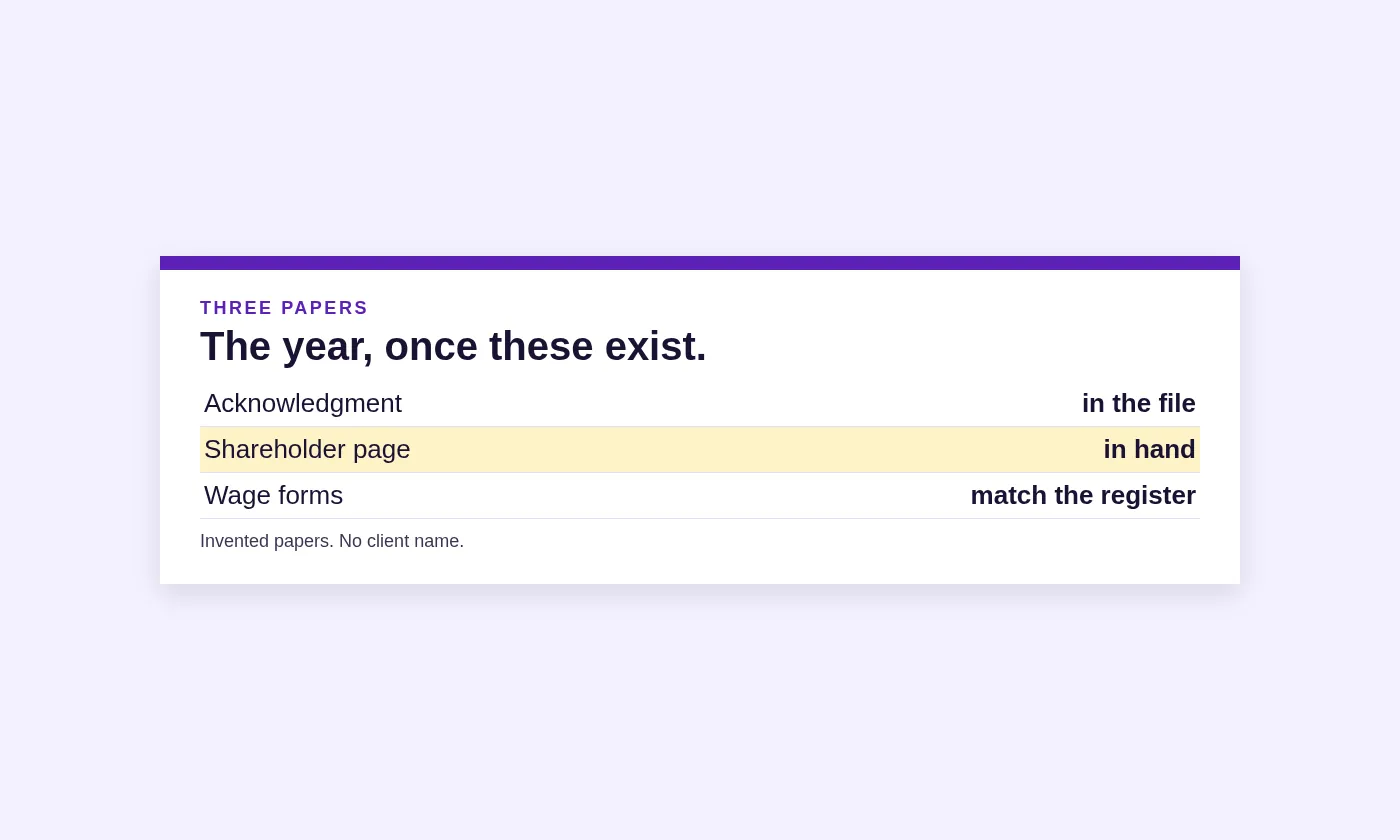
Three papers sit in a row, the acknowledgment, the shareholder page, and the wage forms.

The books close first. A receipt from the shop belongs in the month the sale happened, even when the cash drawer was counted on a later Saturday.

What the owner contributed, what the owner took out, and what profit stayed behind are three lines. Folding them into one number is how a year gets mislabeled.

Name the missing paper.

You will be talking to the Steven Palmieri practice.

The Tax CFO way.

A preparer can stop when Form 1120-S has been sent and each K-1 has left the building. We close the months through the year, set the wage the company pays for the owner's work, and name the distribution before December, so the three papers in March only record a year that was already chosen.

Name the next paper

Six papers, and which one is empty.

Open a slot. The note says whether that paper is in the file, and what we do while the slot stays blank.

  1. LetterAcceptance in the fileHere

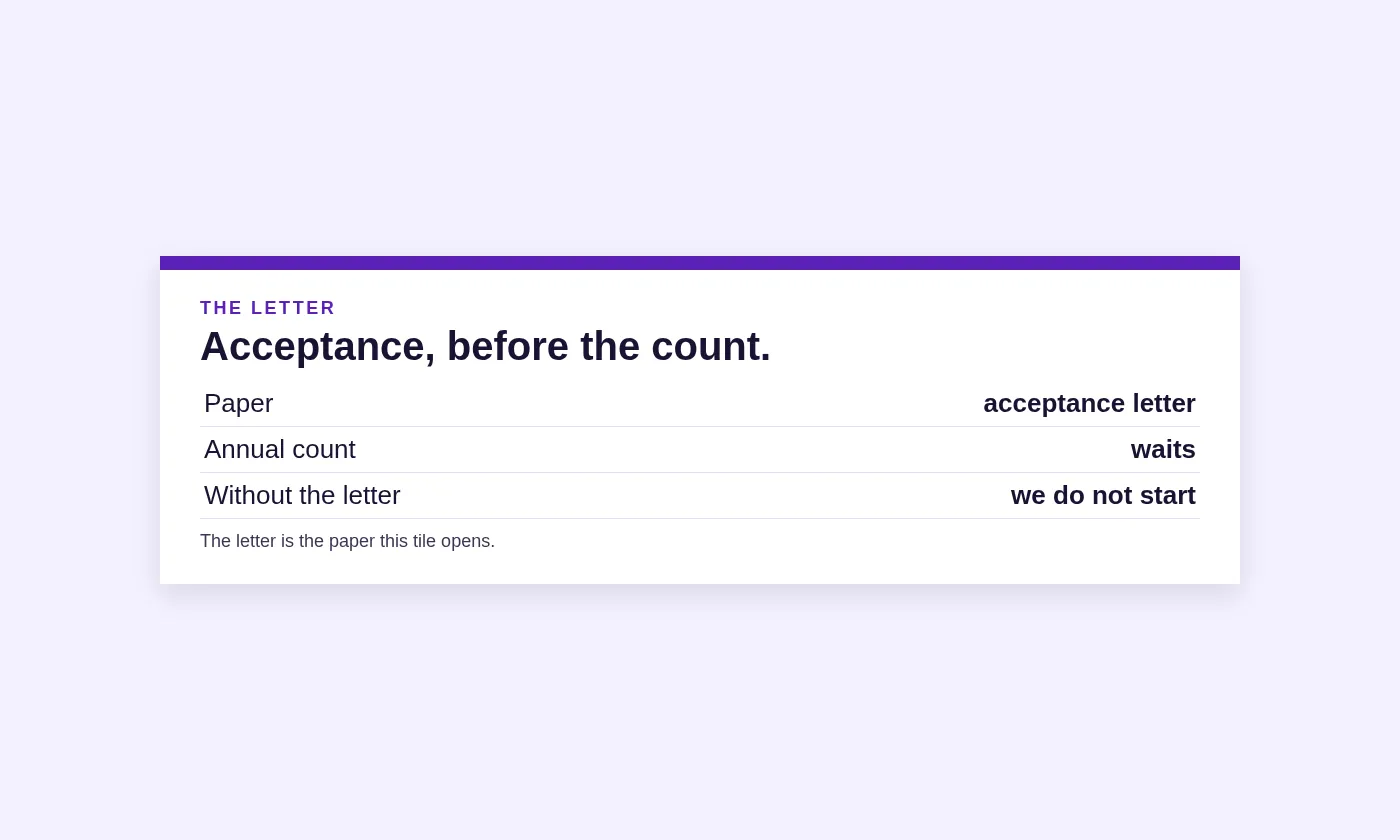
    The company that mailed Form 2553 and kept the letter can move on. Without that letter we pause the annual count.

  2. DateReceipt of the returnMissing

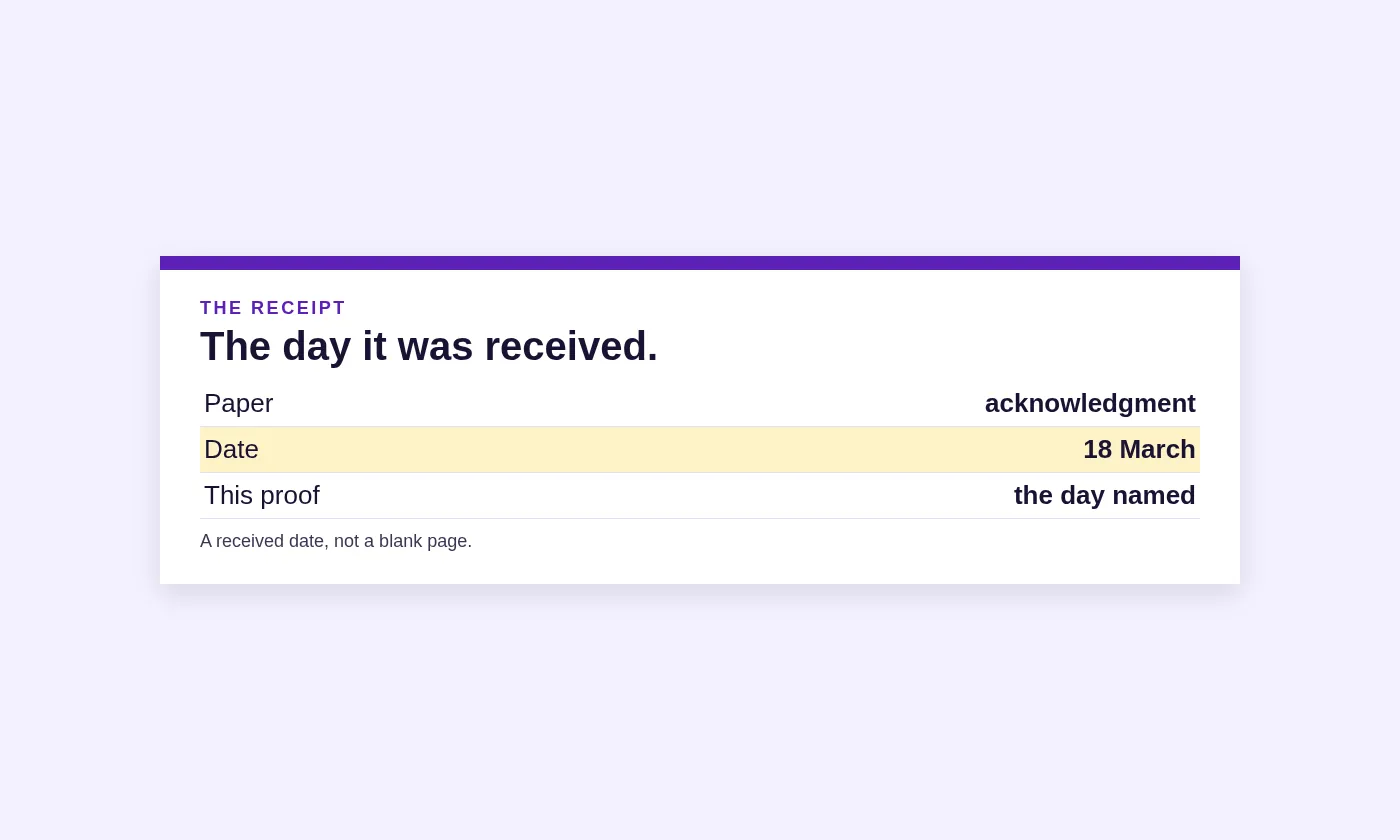
    We leave this one empty. The file left the shop and no date came back. A PDF sitting in a folder fills nothing. We ask for the acknowledgment that names the day Form 1120-S was received.

  3. K-1Copy in each owner's handsHere

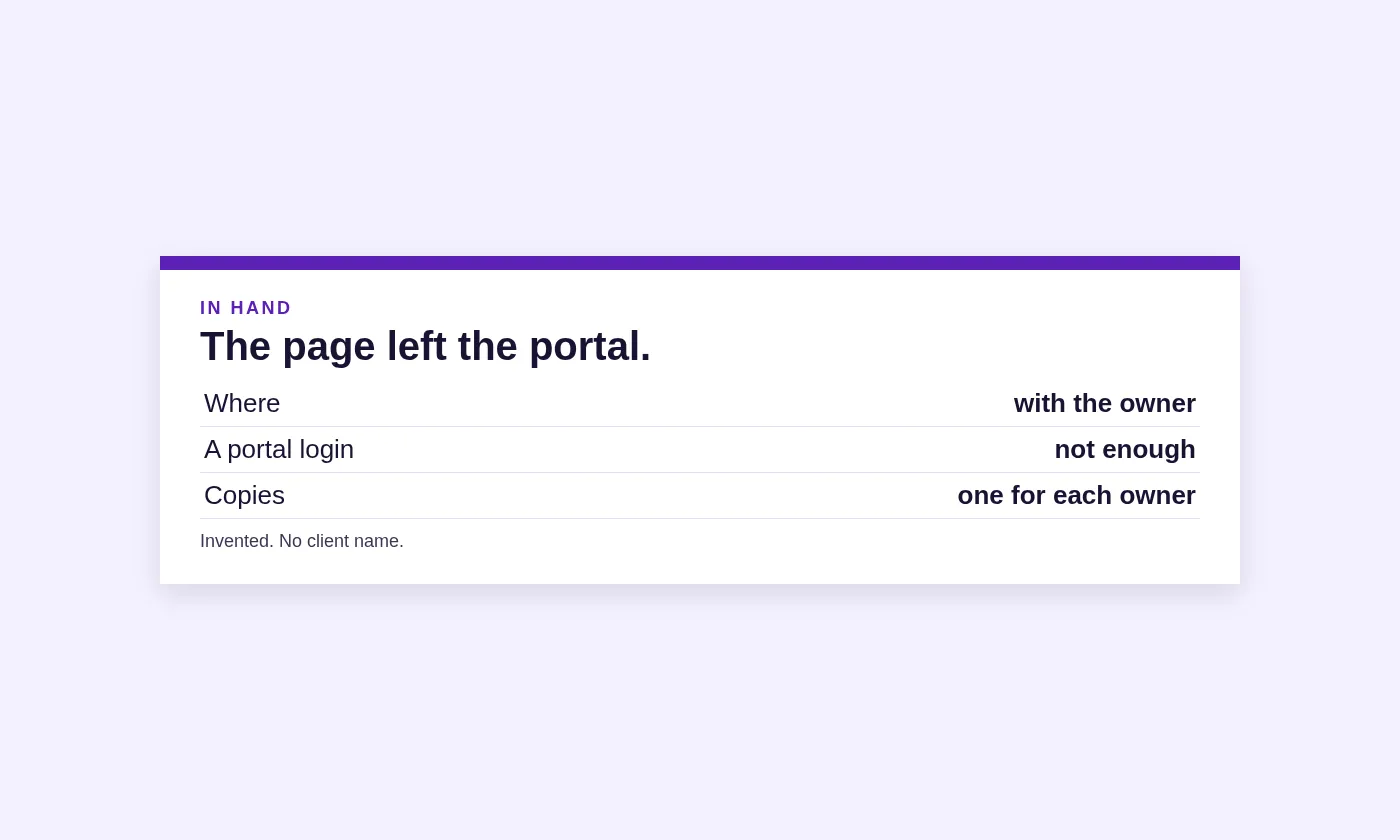
    Two owners and a portal login. We count the people who actually hold the page, then we compare that count with the owner list.

  4. WagesForms against the registerHere

    The payroll register and the wage forms disagree. Pay for work stays apart from cash the owner took out.

  5. DrawA transfer with a new nameHere

    A bank transfer labeled as pay does not fill the wage proof. We rename the line before anyone drafts the return.

  6. CloseMonths that are finishedHere

    A shop that still has Saturday receipts in a drawer has an open month. We close that month before a draft begins.

Name the gap.

Steven Palmieri, Tax CFO.

The Entrepreneur's CFO. We close the month, point a provider you already run at the wage accounts, and prepare the company return.

Click to meet the practice ›Tap to meet the practice ›
What has to be true before we say filed

We use the word filed only when three papers exist. The first is the IRS acknowledgment that Form 1120-S was received. That paper is a receipt. It is a record that the file arrived. It is not a review of the statements inside the file.

The second paper is each Schedule K-1 in the owner's hands. A copy sitting in a portal is a file on a server. We count owners, then we count the people who can hold the page. Those two counts have to match.

The third paper is the set of wage forms that match the payroll register. A federal acknowledgment does not look at wages. A draw that someone labeled as pay does not fill the wage proof. Health coverage for an owner who holds more than two percent of the company belongs on the wage statement, written on the same lines as wages.

Around those three papers the year has a shape. The books are closed. The owner already runs a payroll provider. We point that provider at the wage accounts and then we step aside. We assemble the company return once the months underneath it are closed. We start that work in the fall, while the year is still open, so a wage line or a distribution line can still be corrected.

Equity stays apart. A contribution is what went into the company. A distribution is what came out. Profit still inside the company is its own line, beside what went in and what came out. Mixing those lines makes the K-1 hard to believe, even when the software screen looks finished.

A shop receipt belongs in the month of the sale. If the receipt is still in a drawer when we draft, that month is open. We close it. The statements we hand over carry no assurance. When a lender wants a signed report, that work belongs with a firm that can sign it.
How a green check gets ahead of the papers

Software can show one check when the file is transmitted, or when a menu says the return is ready. That check is the send. It does not create the acknowledgment, it does not put a K-1 in an owner's hands, and it does not compare wage forms with the register.

We would rather leave a proof empty than call the year filed. An empty proof is a sentence we can say on a call. A filled proof that is only a screen is a sentence we will have to take back.

If the acceptance letter is missing, the annual count does not start. A different company return may be due. We do not name that other return on a public page, because the right form depends on facts we have not seen. Bring the letter, or say it is missing, and the conversation starts from that fact.

The company date exists so each owner can have the K-1 before the personal return is due. We do not teach the personal extension on this address. We keep the company date early enough that the page can leave the building in time.

This page borrows no client file. No amount is printed. The shop with Saturday receipts is a picture of a drawer, not a file we keep. If your drawer looks like that, the work does not change with the state line. The company return follows a federal date.

Send the paper you hold.

Name the paper you have, or the one that is still missing. We read that note before the call.

You will be talking to the Steven Palmieri practice.

Where to go next.